3 Ways The Planar Vs Dynamic Can Influence Your Life


Planar Vs Dynamic Headphones
If you're looking to purchase headphones that offer a wide variety of sound profiles dynamic drivers are the best way to go. These headphones use a voice-coil and magnetic windings that rotate between them to make the speaker's diaphragm vibrate.
This creates a spherical sound wavefront which represents audio more accurately. This can lead to distortion at higher volumes.
Cost
Dynamic drivers are easy to construct and are inexpensive. They're essentially composed of a wire (the voice coil) wrapped around a plastic diaphragm that's set into a magnet, and they vibrate according to the electric signals transmitted by your audio source. Due to this, they require less power to drive them than planar or electrostatic headphones. This makes them more portable and easy to use you're on the move. Planar magnetic headphones, however, have much more complex motor systems and massive diaphragms that require larger - or even multiple - magnets to move. They are often more expensive and heavier than dynamic headphones. They also require more power to operate, which is why the majority of headphones that use planar technology require an external amplifier for best results.
Bass Response
Bass response is the primary difference between dynamic and plane headphones. Planar drivers have more linearity and have better bass extension and less distortion than dynamic headphones. They also provide more precise image and greater clarity. They might not have the same power and slam as dynamic headphones. This has led to the rise of hybrid IEMs that utilize two kinds of drivers. These IEMs offer the best of both worlds, and can satisfy a wide range of listening preferences.
The dynamic drivers in headphones transmit sound vibrations through a coil of wire which is suspended by a diaphragm. The magnetic field generated by the coil creates a diaphragm to vibrate, resulting in the sounds that we hear. However this can cause distortion in the lower frequencies, as the movement of the diaphragm is not consistent or accurate. This is why it is important to take into consideration your individual preferences in listening and the environment you are in before deciding on which type of headphone is suitable for you.
The distortion of planar magnetic headphones has been greatly reduced since the vibrations have become more uniform and the diaphragm is moving less. The diaphragm's flat shape allows them to react faster to changes in input signals. This is especially applicable to high-frequency frequencies. In this case, planar magnetic headphones provide more accurate sound with more detail.
Dynamic headphones are more advanced than planar magnetic ones and have been the benchmark in terms of bass response. headphone planar magnetic have a flat frequency up to 20Hz. Planar magnetic headphones have a more pronounced roll-off. However, as technology has improved and improved, many planar headphones now come with a full-range bass response that is comparable to high-end dynamic driver headphones.
The NAN-7, for example, is a top-of-the-line planar that gives an impressive sense of impact and bass. Its bass is quick and precise, with a great sub-bass slam. Its ability to create an impressive and authoritative bass ambiance and authority makes it the ideal choice for orchestral music, such as the opening fanfare from Richard Strauss's opera Aleksandr Solti's "Also sprach Zarathustra." The NAN-7 is also remarkable in its imaging capabilities, and has an outstanding clarity and depth of sound.
Soundstage
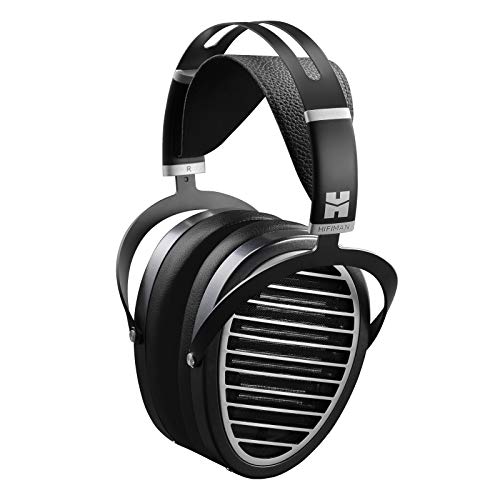
Planar headphones usually have a larger soundstage. The diaphragm can be larger and move more evenly. This could result in a wide, flat soundwave that improves clarity and imaging. This is evident most on headphones with high-end features, such as the Audeze LCD-4 and HiFiMAN Susvara. However, it also applies to more affordable options.
In contrast to dynamic drivers, which only vibrate the portion of the diaphragm attached to the voice coil Planar magnetic headphones have a greater surface area that can be moved by an electrical signal, so they have lower distortion at high volume. They also have a better transient response, meaning they can withstand sudden changes in the input signal.
However it is crucial to remember that planar headphones can still have a limited soundstage if they are not properly fueled. Insufficient headphone amp power can result in muddy bass and a'shimmer' effect that can make listening to music less fun.
Another thing to take into consideration is that dynamic headphones generally have more natural sound quality than planar ones, because they reproduce the frequency response and timbre of the original audio recording better. The dynamic of the driver is also more realistic and natural than the 'plucked' quality of planar headphones. This is a difference that can be masked by a high-quality headphone amp and some of the latest headphones, like the Oppo PM-3 and HiFiMAN HE1000SE have a greater punch than their older counterparts. This is due to the fact that the drivers are more sophisticated and can be driven by more powerful headphone amplifiers.
Comfort
In recent years, headphones with planar magnetics are gaining popularity. This isn't surprising because they provide more precise audio. They are usually heavier and cost more than dynamic headphones. This is due to the fact that they have a larger drivers and require more power to move uniformly. They require balanced outputs, which are present on the majority of DAPs and dongles. Also, they tend to leak more sound than dynamic drivers.